PART 1: THE CONSENT GAP
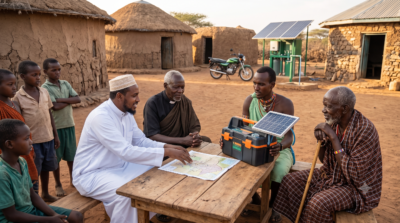
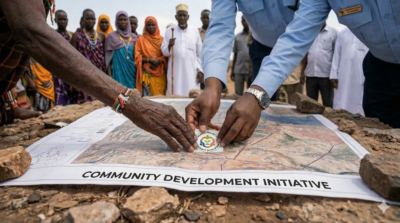
On February 19, 2026, Kenya officially operationalized its National Carbon Registry (KNCR). This is a milestone achievement designed to strengthen our institutional preparedness for global markets while safeguarding national interests and maximizing benefits for our citizens. A carbon registry, by definition, is the central hub where carbon credits are tracked, managed, and traded. However, our research team at Horn-Afric has observed that this technical milestone places the country at a critical crossroads. Kenya must now choose between becoming a global climate finance leader or facing a wave of litigation that could paralyze the sector. To navigate this, we are launching a special series identifying four systemic fissures- the Consent, Information, Benefit-Sharing, and Regulatory Gaps– that must be bridged to ensure market integrity. We begin this series by examining the most immediate threat: The Consent Gap. This is the disconnect between statutory requirements for Free, Prior, and Informed Consent (FPIC) and the practical reality of how carbon projects are established on community land.
The Legal Reality
The risks of ignoring this gap are no longer theoretical. The January 2025 judgment in Abdirahman Osman & 164 others v. Northern Rangelands Trust (NRT) & 10 Others (Petition E006 of 2021) [2025] KEELC 99 (KLR) served as a definitive warning to the industry. In this case, 165 community members successfully challenged the establishment of projects on their ancestral land. The court’s reasoning was clear: public participation is a constitutional imperative, not a mere formality. By invalidating projects that failed this test, the court signaled that a check-box approach to consultation- where information is withheld or consent is hurried- is a fatal legal flaw. Under Article 63 of the Constitution and the Section 5 of the Community Land Act, land-based projects must be grounded in genuine, verifiable community ownership. When developers treat 30-year contracts as one-and-done transactions, they create a legal liability that threatens the entire market’s integrity.
Why does this gap exist? Our analysis shows that it is a failure of timing and transparency. Currently, the system allows for project momentum to build before a community truly understands the 30-year commitment they are making. Without independent legal or technical counsel, the “Informed” part of FPIC is often missing, leaving communities to sign agreements that they may later feel forced to challenge in court. Horn-Afric maintains a hard but pragmatic stance. We support the expansion of Kenya’s carbon markets as an important tool for regional development, but we believe they must be human-proofed to withstand judicial scrutiny. We believe that the KNCR should serve as a Human Rights Gateway rather than just a ledger.
The Way Forward: Surgical Policy Interventions
To bridge the Consent Gap and protect the integrity of Kenya’s climate ambitions, Horn-Afric proposes four strategic interventions to modernize our carbon governance:
- Reform the NEMA No Objection Protocol: We advocate for a mandatory public notice period before the first Letter of No Objection is issued. By making government approval contingent upon verified community disclosure, we ensure that “Prior” consent is a reality, not a legal fiction.
- Harmonize Carbon Rights: Our team suggests explicitly aligning the Climate Change Act with the Community Land Act. By classifying carbon as a natural resource belonging to the community, we eliminate ownership ambiguity and ensure that consent is sought from the rightful owners of the resource.
- Institutionalize Dynamic Consent in CDAs: Consent should not be a static signature on a 30-year contract. We propose standardizing Community Development Agreements (CDAs) with mandatory 5-year review clauses. This ensures that consent remains a living, breathing relationship that adapts as the project evolves.
- Transform the KNCR into a Human Rights Gateway: The National Registry should be more than a technical ledger. We suggest a hard block mechanism within the KNCR that prevents project registration unless an independently audited certificate of Free, Prior, and Informed Consent (FPIC) is provided.
Conclusion
For Kenya to unlock the full potential of its ASALs, we must move beyond revenue-focused frameworks and embrace a rights-based approach. By treating communities as equity partners, we ensure that the KNCR leads to a stable and legally sound future for the Horn of Africa.
Coming Next in the Series:
While consent is the legal foundation, it cannot be informed without technical clarity. In Part 2, we will explore the Information Gap and how technical asymmetry leaves pastoralist communities at a disadvantage during high-stakes negotiations.