Editor’s Note: This is the concluding segment of a two-part deep dive into the psychological bottlenecks of Africa’s green workforce transition. If you missed the structural analysis of the white-collar prestige bias and national behaviour change frameworks, read Part 3A: The Hidden Bottleneck to the Green Transition first.
Fixing macro-structures and deploying national behavior change frameworks establishes a powerful foundation, but the battle against the prestige bias takes on an entirely different operational reality when applied to specific regional landscapes. In highly structured urban spaces, the stigma is reinforced by corporate hiring practices and modern social circles. However, across Kenya’s Northern Frontier District (NFD) and similar arid and semi-arid lands (ASALs), the dynamics of the prestige trap shift entirely. In these vast, historically marginalized regions, the green transition is not an abstract policy agenda- it is an immediate, ground-level engine of climate survival.
The Northern Frontier sits at the absolute epicenter of the continent’s clean energy potential, hosting massive infrastructural anchors like the Lake Turkana Wind Power project and expanding solar mini-grid installations designed to power localized solar-pumped irrigation and resilient livestock value chains.
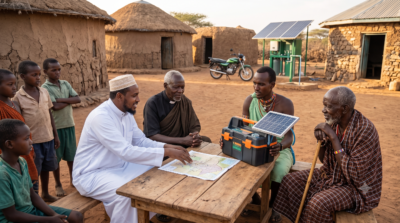
However, deploying physical infrastructure across these pastoralist economies means very little if the localized workforce is culturally decoupled from its maintenance. In these deeply communal, tightly knit social ecosystems, changing youth mentality cannot be achieved through top-down, state-driven corporate messaging. It requires tapping directly into the regions’ primary centers of trust and authority: religious leaders, traditional elders, and communal structures.
Localized Realities: De-Stigmatization across the Northern Frontier
To permanently smash the prestige stigma across the Northern Frontier, behavior change frameworks must be explicitly localized through three community pressure points:
1. Faith-Based Stewardship Classrooms
In communities where social values and daily life are heavily guided by faith, religious leaders—both Imams and Christian clergy—must be engaged as the primary advocates for technical vocational pathways. By integrating the foundational concepts of environmental stewardship (Khilafah or creation care) directly into Friday sermons and communal gatherings, religious authorities can reframe green technical training. Learning to service solar-driven boreholes or manage climate-smart pastoral grids is elevated from a secondary academic choice to an honorable, elite form of community service and ecological protection.
2. Council of Elders Engagement
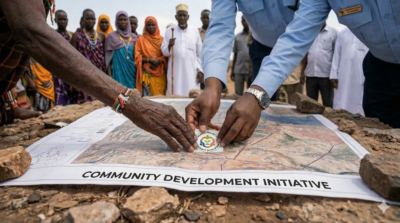
The validation of traditional elders holds immense sway over youth aspirations and parental blessings. Advocacy networks must actively brief local councils of elders on the changing macroeconomic realities of the region. When traditional leaders publicly champion and bless technical vocations, framing a certified water systems technician or a renewable energy mini-grid operator as a vital community protector who shields the community’s herds and crops from climate-induced drought, the deep-seated social stigma evaporates.
3. Anchoring Identity to Localized Green Assets
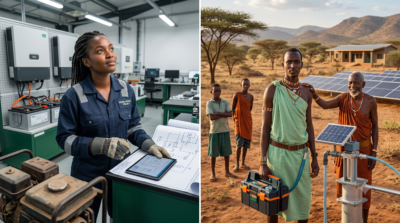
Instead of teaching vocational modules abstracted from regional realities, Northern TVET centers must explicitly bind student identity to the immediate landscape. Training must be structurally contextualized around localized climate challenges. This ensures that local youth see themselves as the elite engineers guarding their own ancestral lands against desertification and climate shocks, rather than seeing technical school as a compromise that separates them from their communities.
The Payoff: Unlocking the “Green Premium Dividend”
When we aggressively dismantle the prestige bias—both through national narrative shifts and deeply localized, faith-based advocacy across the Northern Frontier—we do not just change cultural perceptions. We unlock a massive structural payoff across the entire technical landscape, shifting the momentum from systemic neglect to high-yield economic returns.
At Horn-Afric, we define the Green Premium Dividend as the cumulative economic, developmental, and social returns a nation reaps when it flips the cultural script, converting green technical mastery from a marginalized career alternative into a premium driver of investment, innovation, and generational wealth.
This dividend transforms the workforce reality in two immediate ways:
- Accelerated Innovation at the Frontier: When our technical institutions are culturally and financially elevated into modern green hubs, they become magnets for high-potential youth who possess natural practical engineering aptitude. Instead of navigating obsolete, high-carbon legacy frameworks, these technicians enter the market fully equipped to deploy, optimize, and scale modern green infrastructure- such as e-mobility powertrains and smart solar grids- from day one.
- The Formalization Payoff: By replacing institutional stigma with cultural prestige, we build an inclusive pipeline that seamlessly validates the brilliant, localized survival engineering already happening within the informal sector. Certified, confident artisans are no longer locked out of the formal value chain due to a lack of social validation; instead, they become primary drivers of regional economic resilience, attracting green investment directly to the grassroots.
Ultimately, replacing the prestige trap with a dividend ensures that our climate adaptation strategies are backed by highly capable, celebrated practitioners. We effectively transform our technical training centers into the absolute engine room of a sustainable industrial transition.
Conclusion: Bridging the Strategic Execution Gap
Africa’s green revolution cannot just happen on factory floors- it must be engineered on the technical classroom floor. Sessional paper provisions and macro-fiscal blueprints mean nothing without the technical executioners required to scale them on the ground. To truly realize the potential of our green sectors, the structural architectures of the National Treasury and the Ministry of Education must lock steps.
By building a practical operational transmission belt- synchronizing green fiscal revenues with TVET capital development, replacing rigid institutional audits with a dynamic Green Premium Index (GPI), and hardcoding sustainability models directly into the framework of every Competency-Based Education and Training (CBET) track- we move past static, brick-and-mortar compliance. We elevate green technical competence to its rightful place: as a badge of premium cultural prestige, the foundation for our youth’s economic survival, and the primary driver of our continent’s sustainable industrial transformation.