The Horn of Africa is one of the world’s most complex displacement hotspots, where conflict, governance challenges, and climate change converge. Today, millions of people are displaced across the region. While conflict remains the primary driver, climate hazards —particularly droughts and floods—are increasingly multiplying risks, eroding livelihoods, and prolonging humanitarian crises.
The Scale of Displacement
According to the Internal Displacement Monitoring Centre (IDMC), Sub-Saharan Africa hosts the largest number of internally displaced persons (IDPs) globally, and the Horn of Africa accounts for a substantial share. In 2024, the region recorded over 12 million IDPs, with Ethiopia, Somalia, and Sudan carrying the highest caseloads.
- Ethiopia: More than 3.4 million IDPs, over half displaced by conflict, with floods and droughts driving a growing share.
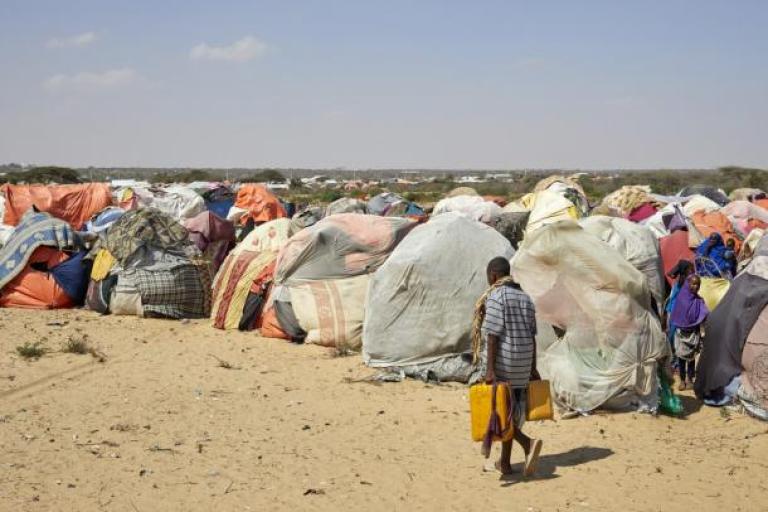
- Somalia: Nearly 4 million IDPs, the majority displaced by conflict and insecurity, but drought and El Niño floods have uprooted hundreds of thousands more in recent years.
- Sudan and South Sudan: Armed conflict remains dominant, yet climate shocks—flooding of the Nile basin and seasonal droughts—intensify humanitarian needs.
- Kenya, Djibouti, and Eritrea: Smaller but significant displacement patterns, often linked to cross-border drought, food insecurity, and flooding in informal urban settlements.
Climate Hazards Driving Migration
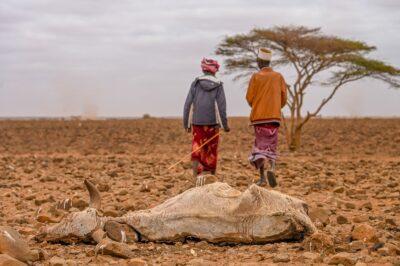
The 2023–24 El Niño cycle demonstrated the scale of climate shocks. Across Somalia, Ethiopia, and Kenya, floods affected more than 6 million people and displaced over 1.5 million. This came after four consecutive failed rainy seasons between 2020 and 2023 that had already killed millions of livestock, exhausted coping strategies, and deepened poverty.
Droughts continue to devastate pastoral economies in Somalia, Ethiopia’s Somali and Afar regions, and northern Kenya, while floods repeatedly damage homes and infrastructure along the Shabelle, Juba, Nile, and Omo river basins. In Djibouti and Eritrea, recurrent droughts and water scarcity drive urban drift, often into flood-prone settlements.
Climate as a Threat Multiplier
Climate change interacts with, rather than replaces, conflict as a displacement driver. It multiplies risks through four pathways:
- Livelihood collapse – Droughts wipe out herds and rainfed crops, while floods damage homes and public services, triggering repeated displacement.
- Resource competition – Scarcity of pasture and water intensifies local conflicts, especially along cross-border pastoral corridors.
- Protracted displacement – Damaged farmland and infrastructure prevent safe returns, locking households into long-term humanitarian dependence.
- Urban spillover – Displaced families move into informal settlements in towns such as Baidoa, Dollow, Jijiga, and Garissa, where flood risk is high.
The Science Behind the Risk
The Intergovernmental Panel on Climate Change (IPCC) warns that East Africa is warming faster than the global average. Projections show an increase in extreme rainfall events alongside longer and more frequent droughts. These shifts mean higher volatility for agriculture, water security, and health systems—core foundations of livelihoods in the Horn.
As a result, climate hazards magnify the impacts of insecurity. In places where armed conflict already drives displacement—such as Ethiopia, Somalia, and Sudan—climate change undermines recovery, slows returns, and raises humanitarian costs.
Policy Priorities
Addressing displacement in the Horn of Africa requires integrated strategies that cut across humanitarian, development, and peace sectors. Five priorities stand out:
- Pastoral risk buffering: Expand early destocking, fodder banks, veterinary services, and livestock insurance to reduce drought-driven displacement.
- Flood-resilient shelters and sites: Elevate settlements, strengthen drainage, and enforce risk-sensitive land-use planning in chronic flood corridors.
- Resilient returns: Link shelter repair with water, sanitation, and livelihoods support to enable sustainable recovery after conflict and climate shocks.
- Urban disaster risk reduction: Upgrade informal settlements in secondary towns receiving IDPs, with emphasis on drainage and waste management.
- Integrated data systems: Publish country- and woreda-level dashboards merging conflict, climate, and displacement data to guide anticipatory action.
Looking Ahead
The Horn of Africa demonstrates how climate change acts as a threat multiplier, compounding conflict and deepening displacement. Unless governments, regional bodies, and international partners act in unison, millions will remain trapped in cycles of forced migration.
For think tanks and NGOs, the evidence underscores an urgent message: the region’s displacement crisis cannot be solved through conflict resolution alone. Resilience to climate extremes, investment in livelihoods, and cross-border cooperation are essential to break the cycle of vulnerability.